




Blanched flour
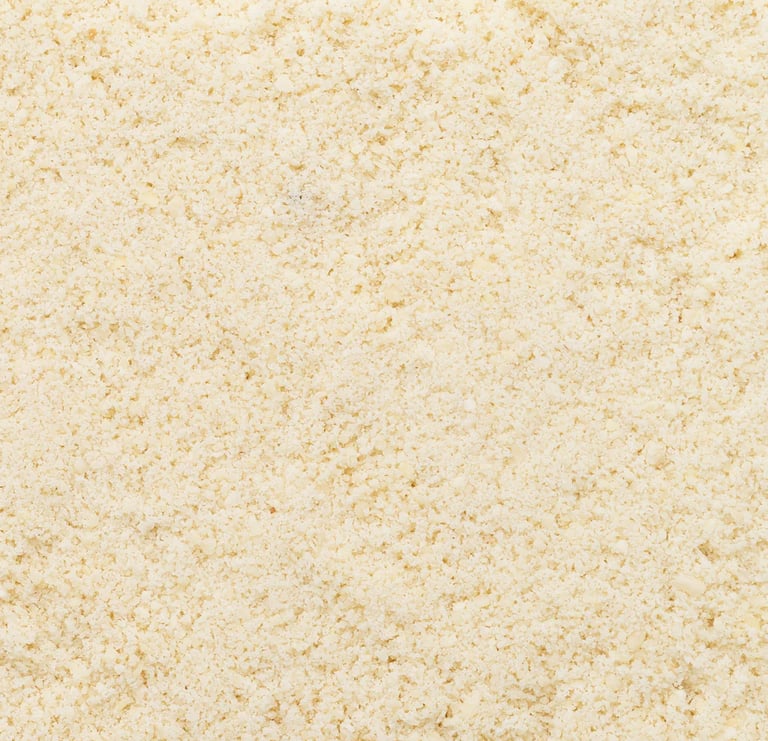
Raw blanched ground almonds (also known as almond flour) are the result of grinding sweet almonds that have had their brown skin removed through a blanching process.
Here are its main characteristics:
Appearance and texture: it has a pale white color and a fine, smooth, and loose texture, similar to coarse flour.
Flavor: its flavor is delicate, subtly sweet and oily, providing a pure nutty aroma without the bitter note that the skin sometimes imparts.
Culinary use: it is a star ingredient in classic and healthy baking. It is essential for making macarons, marzipan, cakes (like Santiago cake), moist sponge cakes, and cookies.
Properties: because it is neither roasted nor fried, it retains all its nutrients: it is rich in healthy fats, vegetable protein, vitamin E, and fiber.
Furthermore, it is naturally gluten-free, making it the perfect substitute for wheat flour for people with celiac disease or on low-carb (keto) diets.
Blanched halves
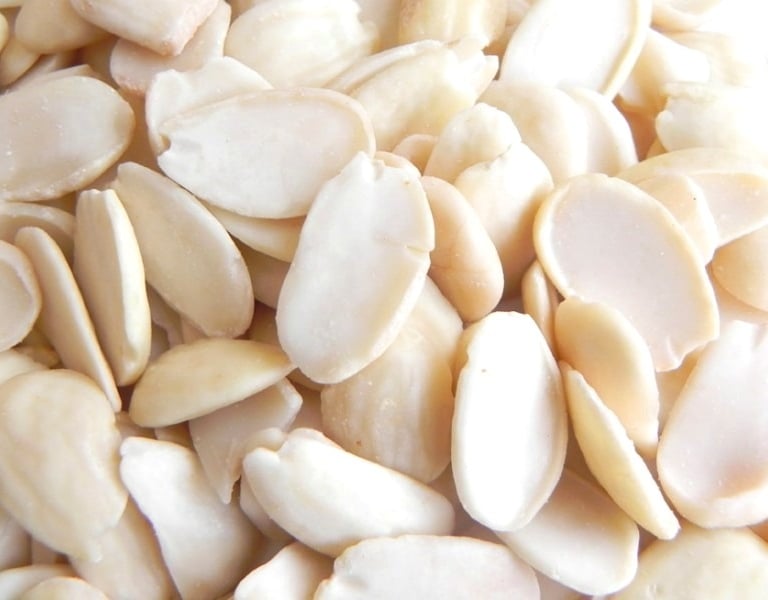
Raw blanched almond halves are almonds that have had their outer brown skin removed through a quick blanching, and are then split lengthwise.
Here are their main characteristics:
Appearance: they have a uniform ivory-white color, a smooth texture, and a clean, crisp, crescent shape.
Flavor and aroma: because they are neither roasted nor fried, they retain a natural, mild, slightly sweet flavor and a subtle aroma of fresh nuts.
Versatility: they are a star ingredient in cooking and baking. Ideal for decorating cakes, sponge cakes, and chocolates, adding to salads, sautéing with vegetables or rice, and preparing classic sauces (such as romesco or ajoblanco).
Properties: they are an excellent source of healthy fats, plant-based protein, fiber, vitamin E, and magnesium.